Blog
Blog
Blog

Latest Articles
International Summer School 5-10 July 2026
My internship at Yahad - In Unum
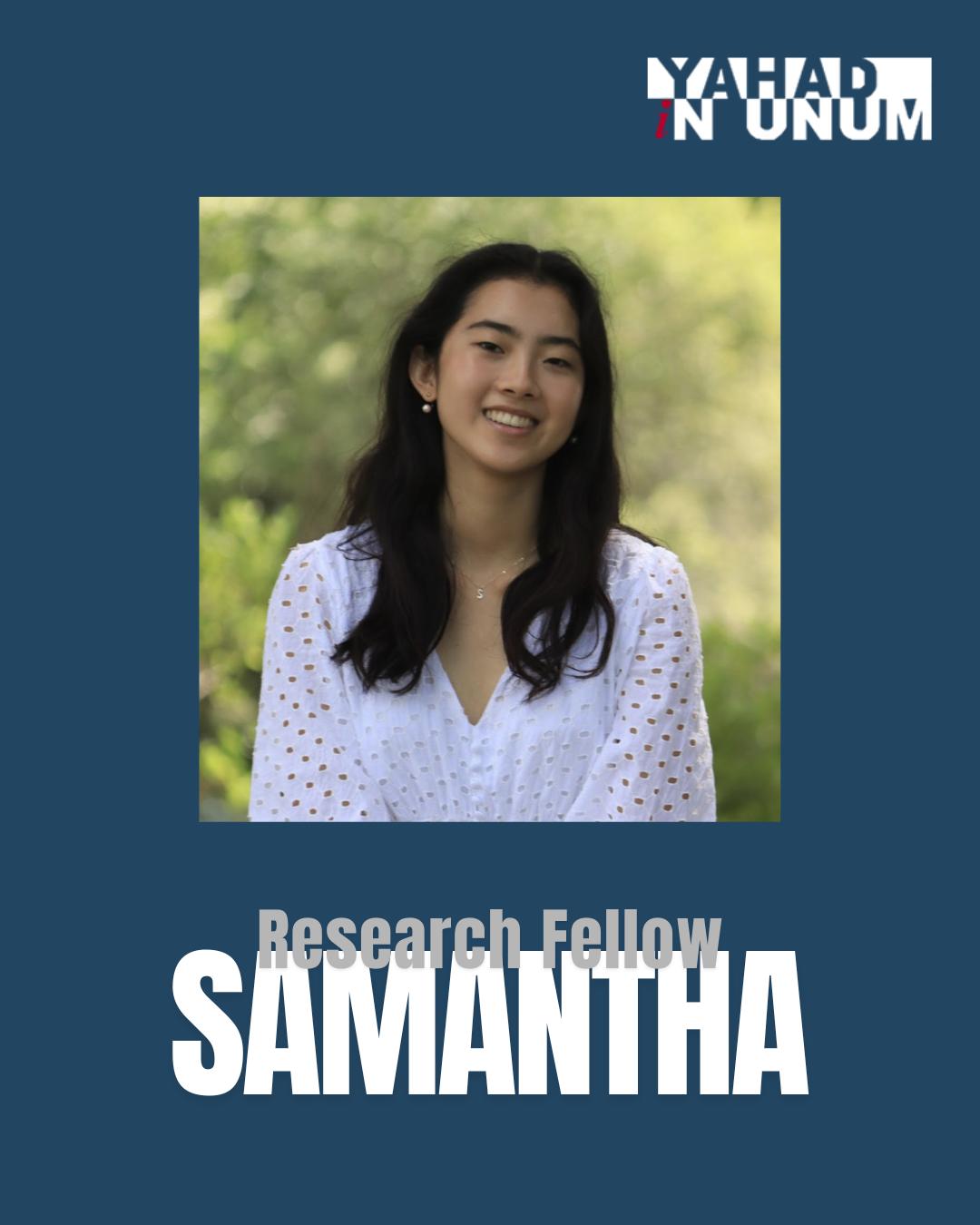
I am exceptionally grateful for the opportunity to contribute to Yahad – in Unum’s mission this summer. The team at Yahad encouraged me to develop my personal interests, allowing me to engage in projects related to genocide research and education. Over the past six weeks, my main project was an educational workshop about the Holocaust in Lithuania that prompted me to consider genocide studies from the perspective of the teacher instead of the student. I had the chance to enhance my previous knowledge about the Holocaust by Bullets, gained from coursework with Father Desbois, through working with the workshop’s archival documents and witness testimonies. Additionally, I learned about several aspects of Yahad’s operations with smaller projects related to historical research and social media outreach. I loved coming to work every day and being a part of the team at the Paris office, where I was inspired by the passion, dedication, and diligence of my coworkers. Yahad’s diverse team of historians, translators, educators, and researchers taught me about the varied methodologies that can be employed to investigate past mass atrocities and prevent future cases of violence. Overall, my time at Yahad solidified my interest in concentrating on genocide studies during my undergraduate years and beyond. I am thankful for the guidance and support of the entire Yahad team!
My First Participation in a Research Trip
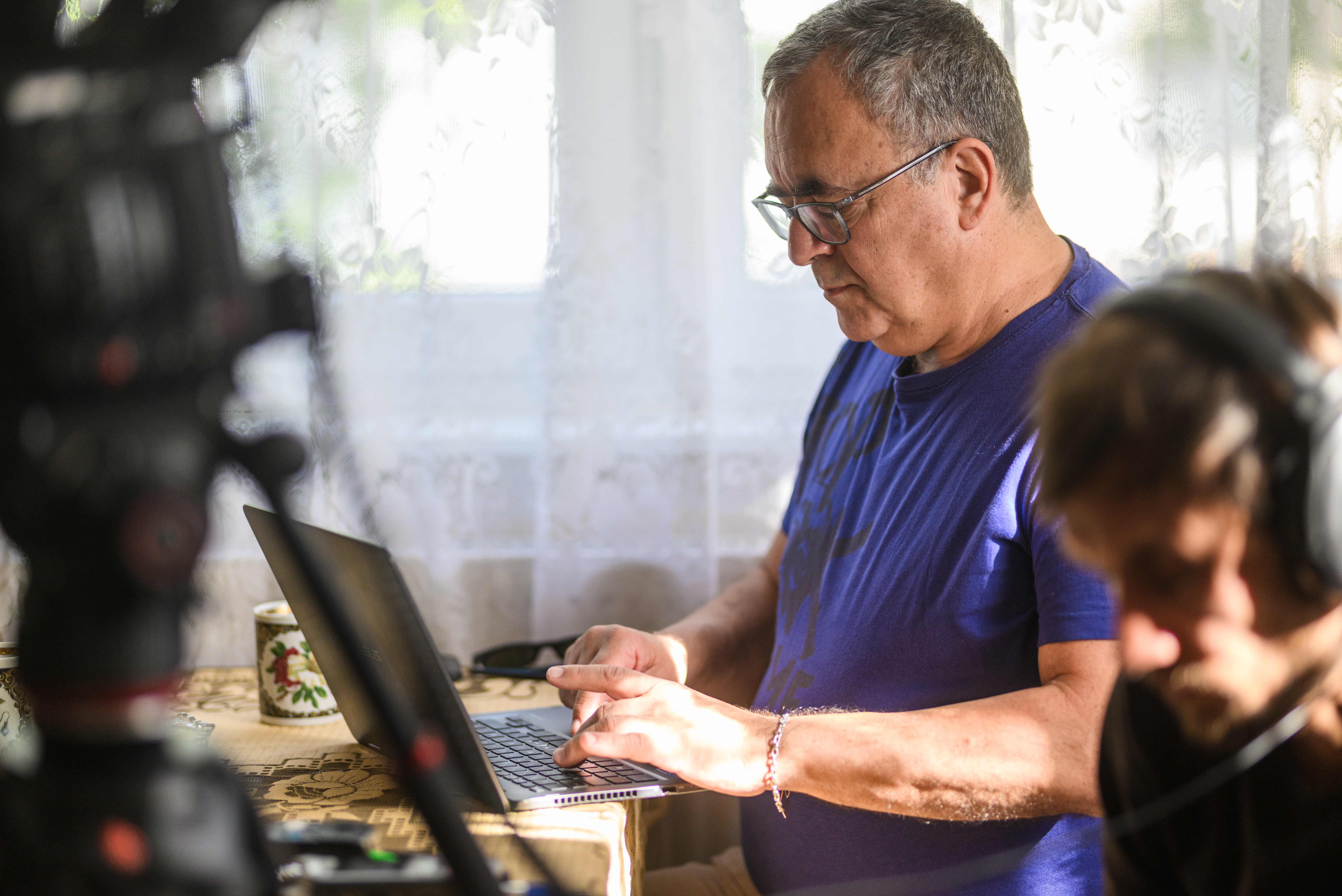
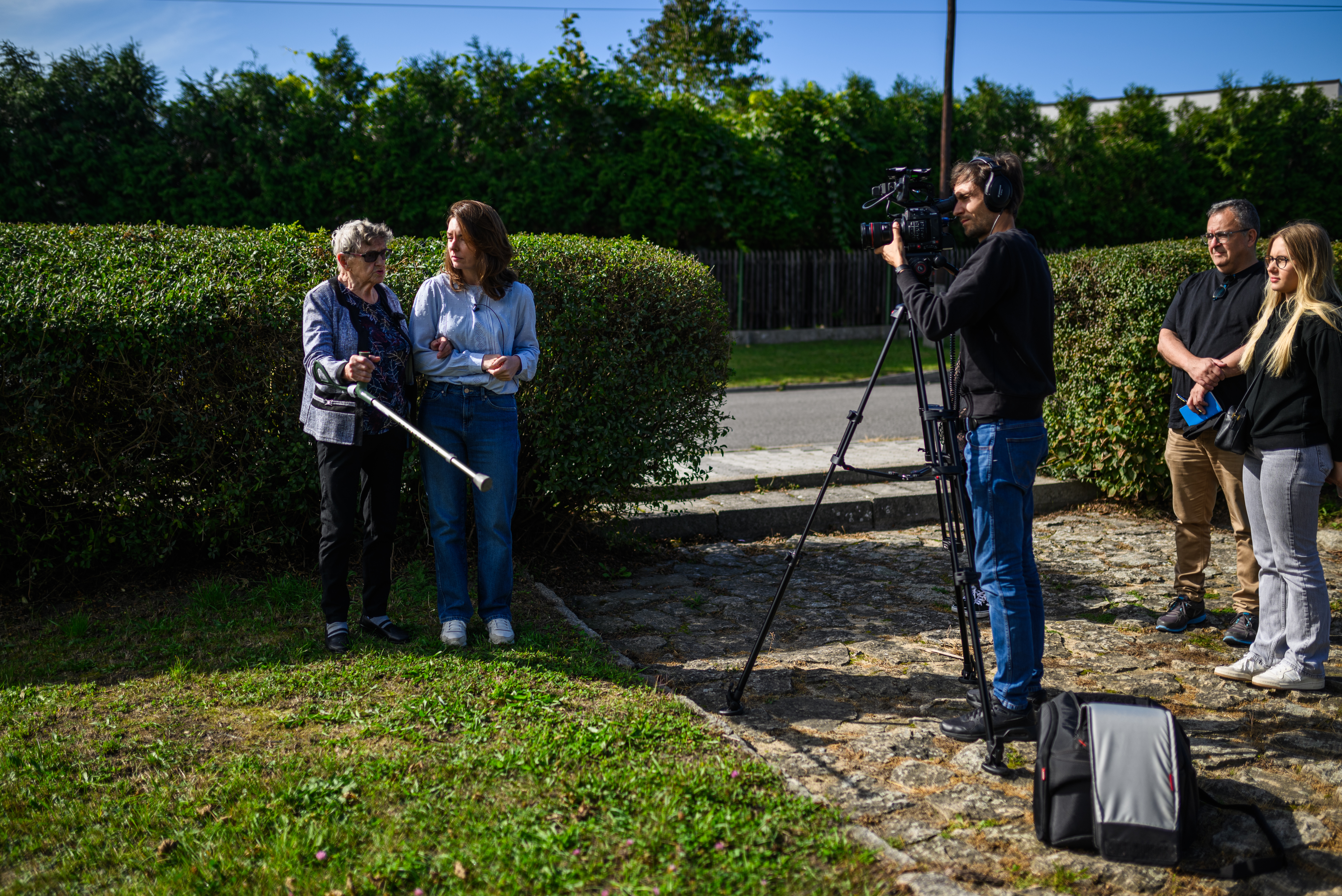
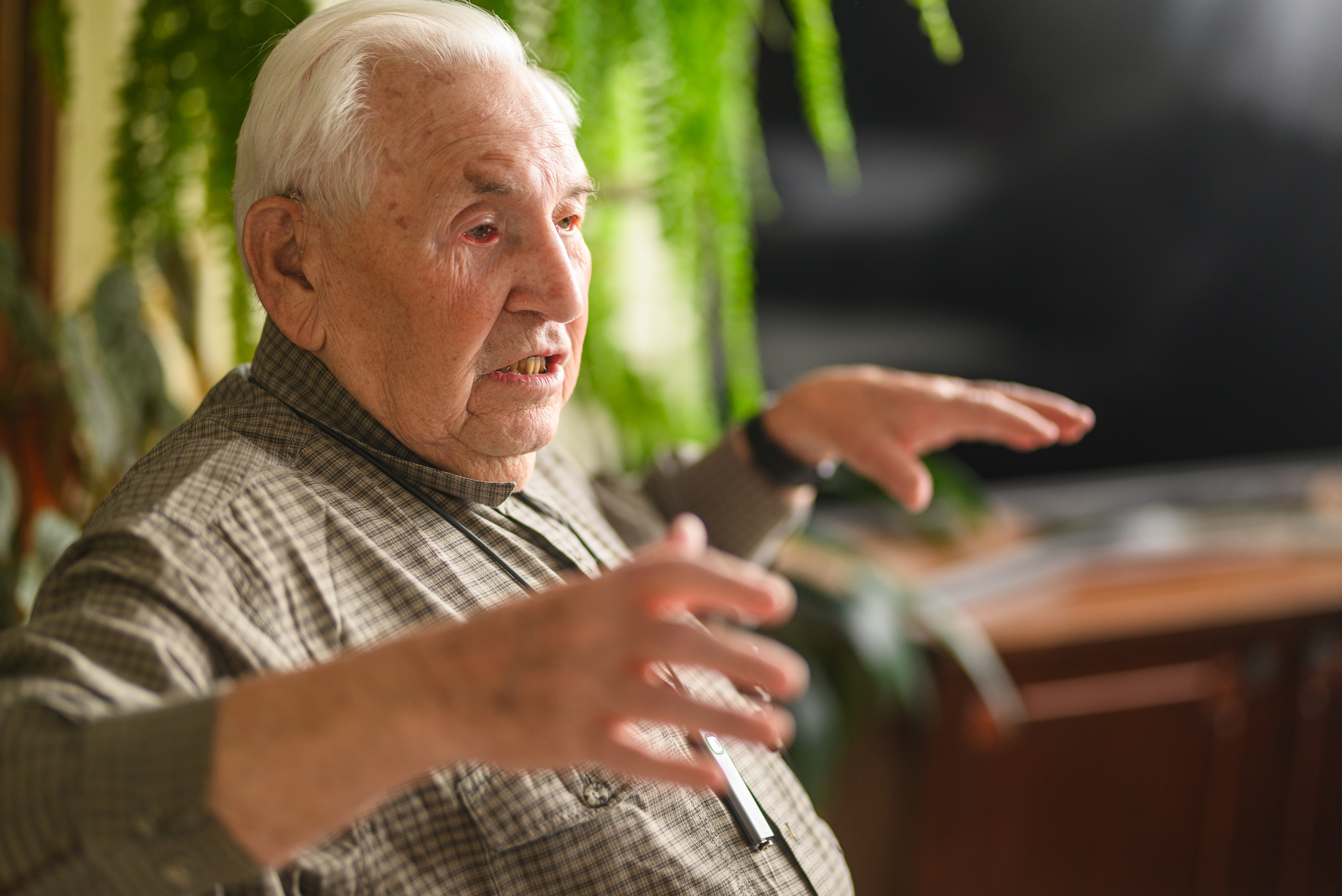
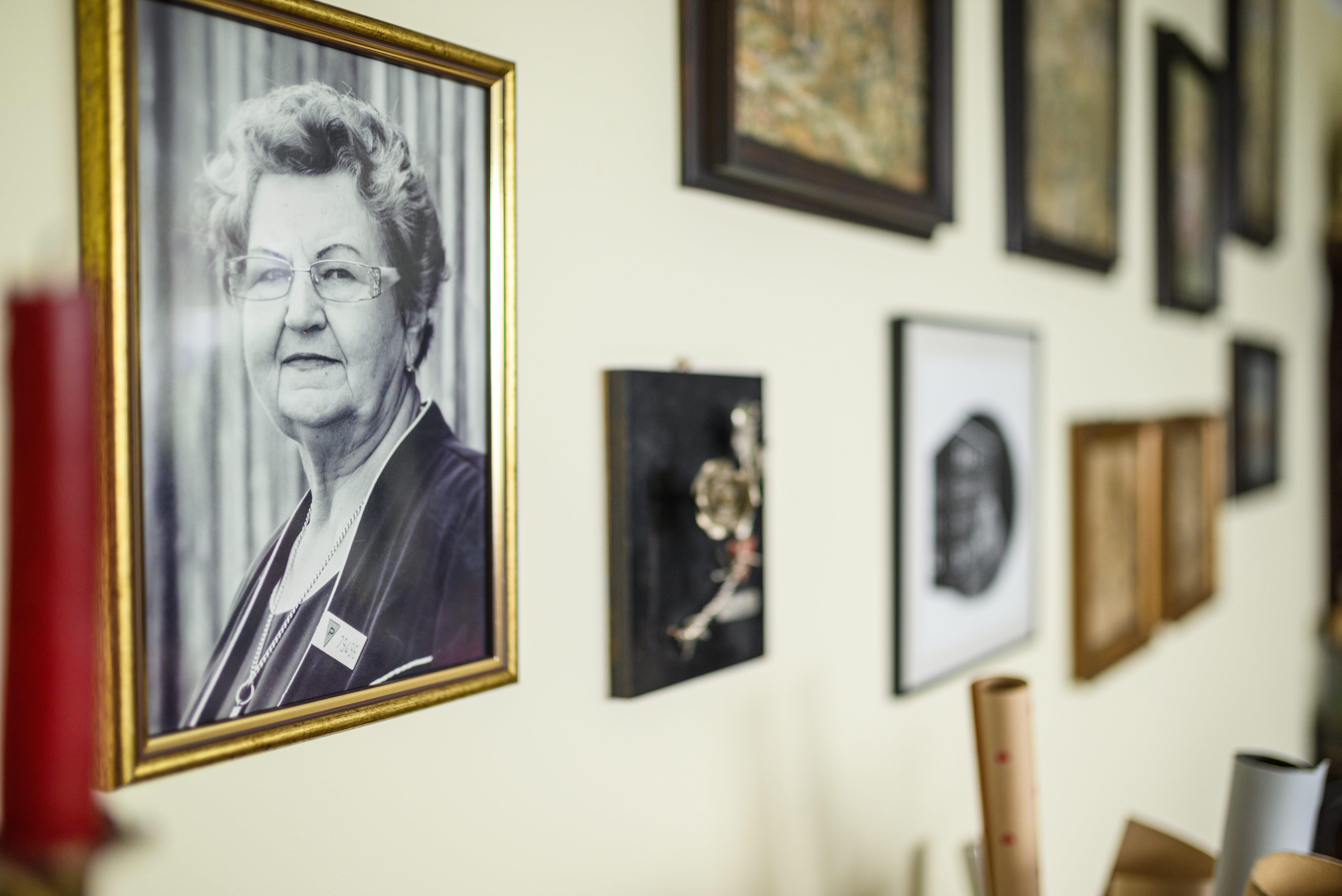
I have been volunteering with Yahad - In Unum for a year, and the organization entrusted me to participate as a scribe in a research trip to Poland. I stayed there from September 17 to 26, 2024. We began our journey in Oświęcim (Auschwitz, in the Silesia region) with the goal of collecting testimonies from Polish witnesses who had seen the massacres that occurred during the "death marches."
Upon arrival, the team leader, Renata Masna, informed me that the planned itinerary would not proceed as expected. Two routes (south and north) were taken by the deportees guarded by SS soldiers as they left Auschwitz starting January 18, 1945. The research trip to gather testimony about the death marches was prepared for these two routes. However, the southern route was completely flooded, and the damage caused by Storm Boris was catastrophic. This was the same route taken by Simone Veil with her mother and sister. The team remains hopeful about completing it next year.
Here, I learned about the adaptability and expertise required to shift focus to other witness searches than those initially planned. While maintaining the original goal, Renata redirected the trip to focus on the marches that headed north of Auschwitz.
Without local knowledge, historical expertise about the period, and a cohesive, experienced team, this change would not have been possible. They had to quickly identify locations where investigators could find witnesses, redefine the research strategy, and map out the progress along these northern routes. The settings were different (shifting from numerous villages in the south to industrial cities where anonymity made meeting witnesses much harder), the distances were different, and the historical documentation changed.
In one evening, the team re-organized everything. I observed them that night and over several mornings before we set out. Focused on their maps, with a deep understanding of the history behind these marches, they determined and built a daily action plan. And every morning, the same approach, the same commitment.
Having extensive experience in team management and work organization, I found it impressive to witness such professionalism paired with constructive good humor. It was almost exhilarating to me.
I saw the investigative team head out in one direction while the interview team went another. Everything was seamless. They found witnesses—people who had seen the prisoners walking, or rather dragging themselves, surrounded by guards without dogs but ready to kill. These witnesses also guided us to sites of Jewish life, mass graves filled with mutilated bodies, cemeteries, remnants of synagogues, and more.
In the car, traveling between interviews, photos, and recordings, I reflected on Yahad's achievements after 20 years of work: nearly 8,000 witnesses documented, over 3,300 mass graves identified with hundreds of thousands of bodies beneath the ground. Each testimony was collected one by one. What a monumen...
Read More →
DAY 6 November 28: Trawniki Nicole, Justin, Tammy, Kira
1. There’s so much that has been said about this week, I’m sure. I’m so thankful for Todd, Ewa, Renata, and everybody else getting this group off the ground. Sitting on what has to possibly be the tiniest kitchen floor in Poland with 15 other people listening enraptured to an eyewitness testimony, followed up with sitting side by side on a couch with four others, the rest of us packed into a dining room, for yet another eyewitness testimony was just the biggest blessing I could have today.
2. I woke up this morning and did not know what to expect. After the last few days, and seeing what we have seen, I didn’t know what Trawniki would bring. I have to confess, that I did not know much about Trawniki. What I did know was primarily centered around the harvest festival and the Trawniki men.
I was very shocked to see that there was not much remnants of the Holocaust left. Aside from the factory, and the one small memorial, I would never know that thousands of people were killed in that place. There was no memorial near the killing site, and the factory expansion (the cleaning factor) appears to cover the other killing location.
I understand that you cannot live in the past. I understand that people moved back into the village, and had to move on with their lives. I understand that lives do move forward. Yet, we cannot forget about lives that were lost, and especially lives that were taken so suddenly and violently. I felt like that is what happened in Trawniki. The war ended and people picked up the pieces, but really failed to recognize the horror that happened there.
3. Visiting the site of the Trawniki camp was both sobering and profoundly moving. Initially established in September 1941 as a detention facility, Trawniki quickly transformed into a hub of terror. By late 1941, it became a training ground for auxiliary police tasked with securing German settlements in the occupied Soviet Union. 2,500 were trained and became known as the Trawniki Men. In 1942, it shifted again, serving as both a transit and forced labor camp
for Jews. Its most horrific chapter came in 1943, during Operation Harvest
Festival, when over 10,000 Jews were executed, their bodies burned and buried.
The weight of this history was intensified by listening to the testimonies of Zofia and Alina, two young girls living in or close to Trawniki. Alina, a Jehovah’s Witness, recounted sorting clothing at the camp as a child, a task that forced her into proximity with unimaginable suffering. Despite their youth, both girls understood the atrocities unfolding around them, and they spoke of friends they lost—names and faces forever etched in their memories.
Standing on the grounds where these events transpired, I felt a deep responsibility to preserve and share these stories. The systematic cruelty that defined Trawniki and the resilience of Zofia and Alina serve as stark reminders of the depths of human cruelty and the importance of remembrance.
4. Before coming to Pola...
Read More →
DAY 5 November 27: Bełżec Jennifer, Nicole, Casey, Tammy
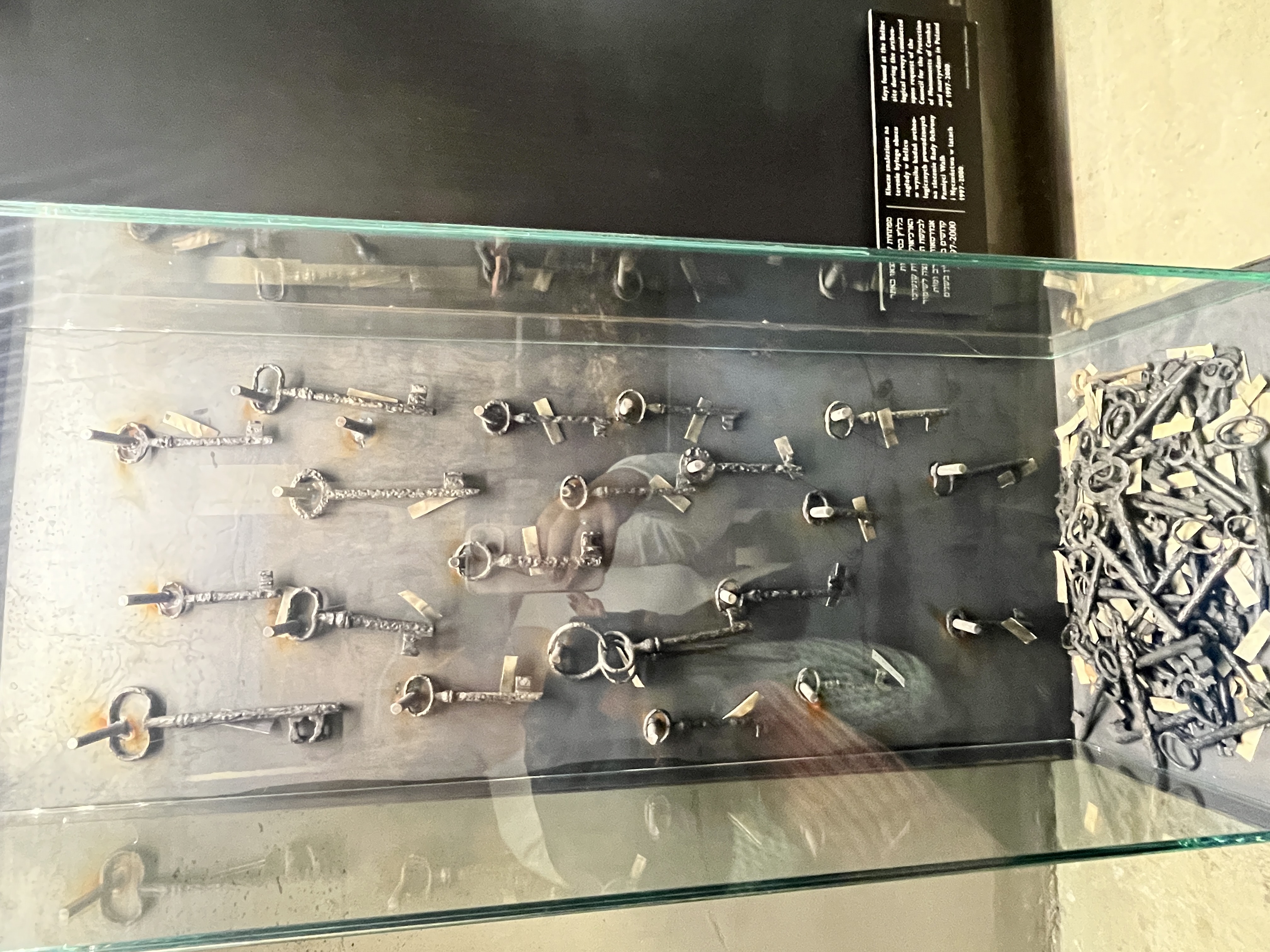
1. Keys of Hope
Our house key. We go no place without it because we always plan to return. So was the case of hundreds of thousands of Jews as they were loaded on the trains, bundles in their hands, unsure of their destination. They may not have known where they were going, and fear must have been overwhelming them, but they carried their keys with them. They carried hope with them. These keys were found by archaeologists as they explored the grounds of Belzec from 1997-2000. This is but a small representation of the amount of keys they found.
See picture 1
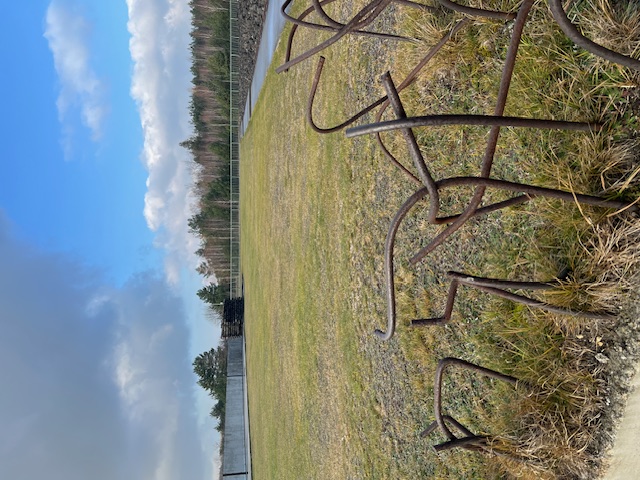
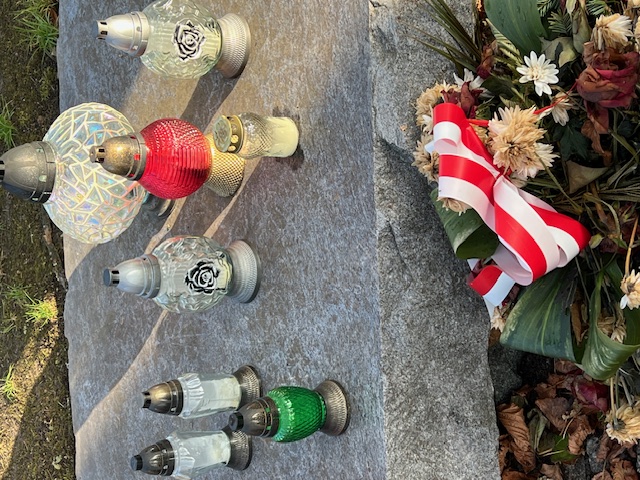
2. Life - Death Darkness - Light Pain - Beauty The overall theme of juxtaposition was what I had come up as I was thinking about what to write for today. It’s been what I’ve been seeing all week, but it really hit home today. I was definitely not prepared for just how much it would move me. What I’ve heard from our YIU leaders that this was going to be “heavy,” but I didn’t realize how much. The size of Bełżec that sent thousands of souls to their eternal resting place is imposing yet simplistic, and is artistically stunning. Yet, a couple of miles down the road is the memorial to the Roma and Sinti people, located in a little area one would mistake for a park, with newly built houses across the street. I’m honored to be here and we need to keep the voices of the survivors - as much as the voice of the victims - alive. It’s our turn to carry the story.
See pictures 2 and 3
3. “What all these victims need above all is to know that they are not alone; that we are not forgetting them, that when their voices are stifled we shall lend them ours, that while their freedom depends on ours, the quality of our freedom depends on theirs.”
--Elie Wiesel, Nobel Prize acceptance speech
In 1981, a 21-year-old undergraduate student named Maya Lin won the bid to create the Vietnam War Memorial in Washington DC. Lin was the winning entry out of 1,422 submissions.
Lin’s design was immediately criticized. Some criticized her minimalist design. Others complained about her ethnicity (Lin is Vietnamese). Others objected to her choice of omitting the names of survivors on the memorial wall. Many seemed to agree that the dark complexion of the granite gave a negative message towards the Vietnam War.
Perhaps these are the reasons that only 9 entries were submitted to create a memorial at Bełżec. But I doubt it. Artists face criticism no matter their chosen medium. The low number of entries submitted probably has to do with the questions of memory and remembrance. How does one create a memorial for some 500,000 people who were systematically murdered at Bełżec?
Bełżec serves as physical manifestations of memory, providing spaces for reflection, education, and commemoration. It houses artifacts, documents, and testimonies that help to illuminate the historical context of the Holocaust and the personal experiences of its victims and survivors.
In addition to formal institutions, informal acts of remembr...
Read More →
DAY 4 November 26: Józefów Abby, Jenai, Casey, Justin
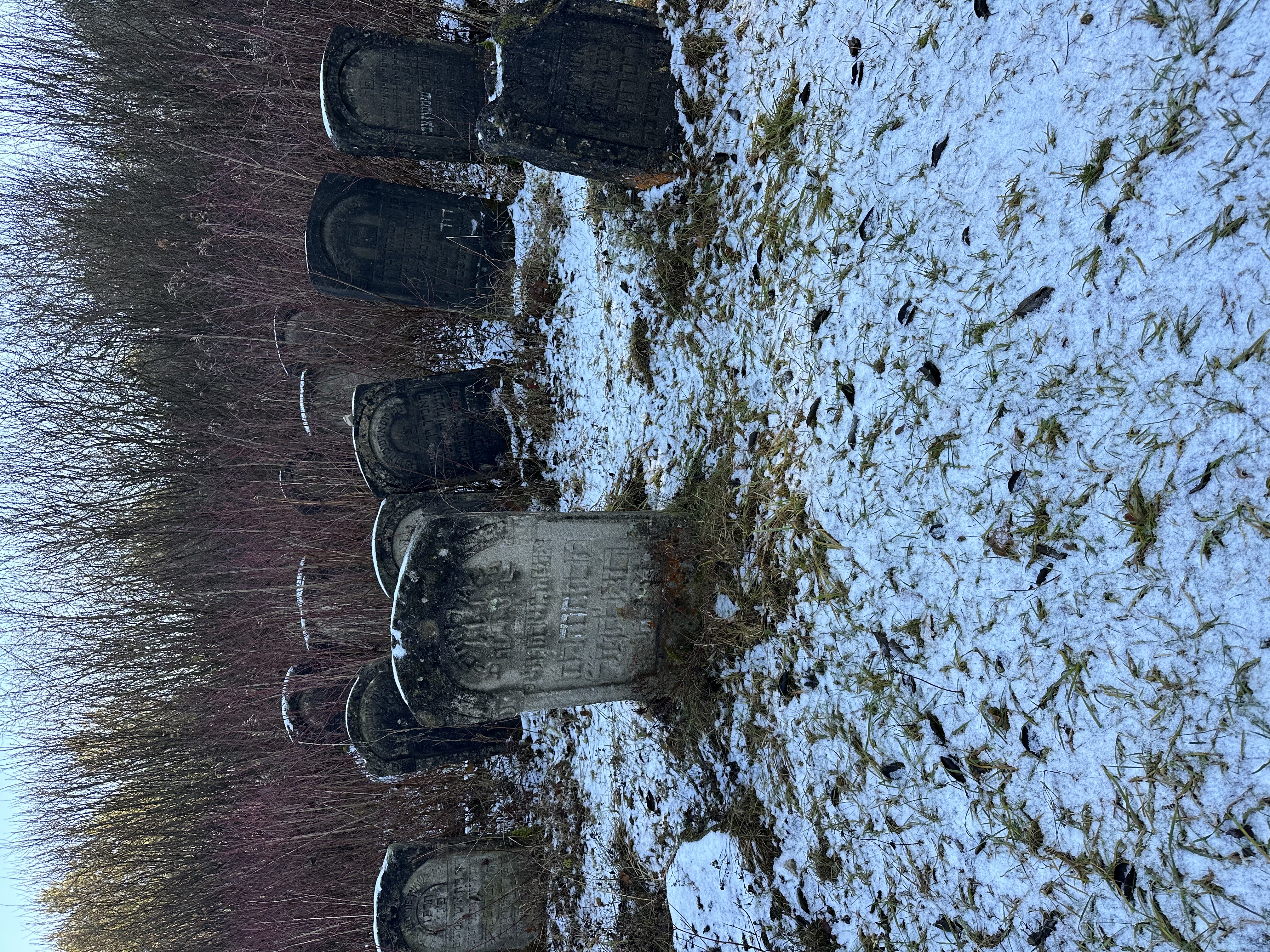
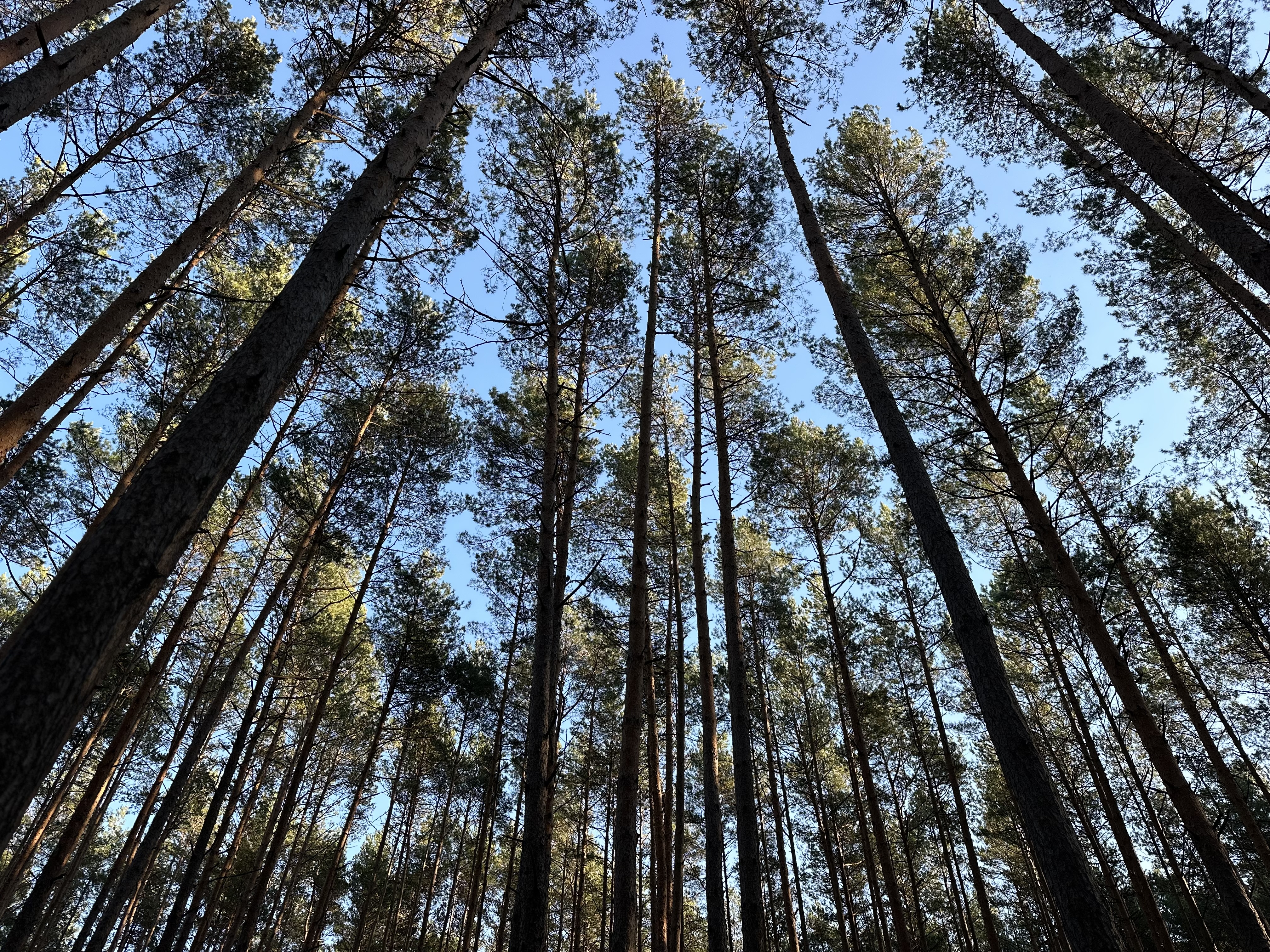
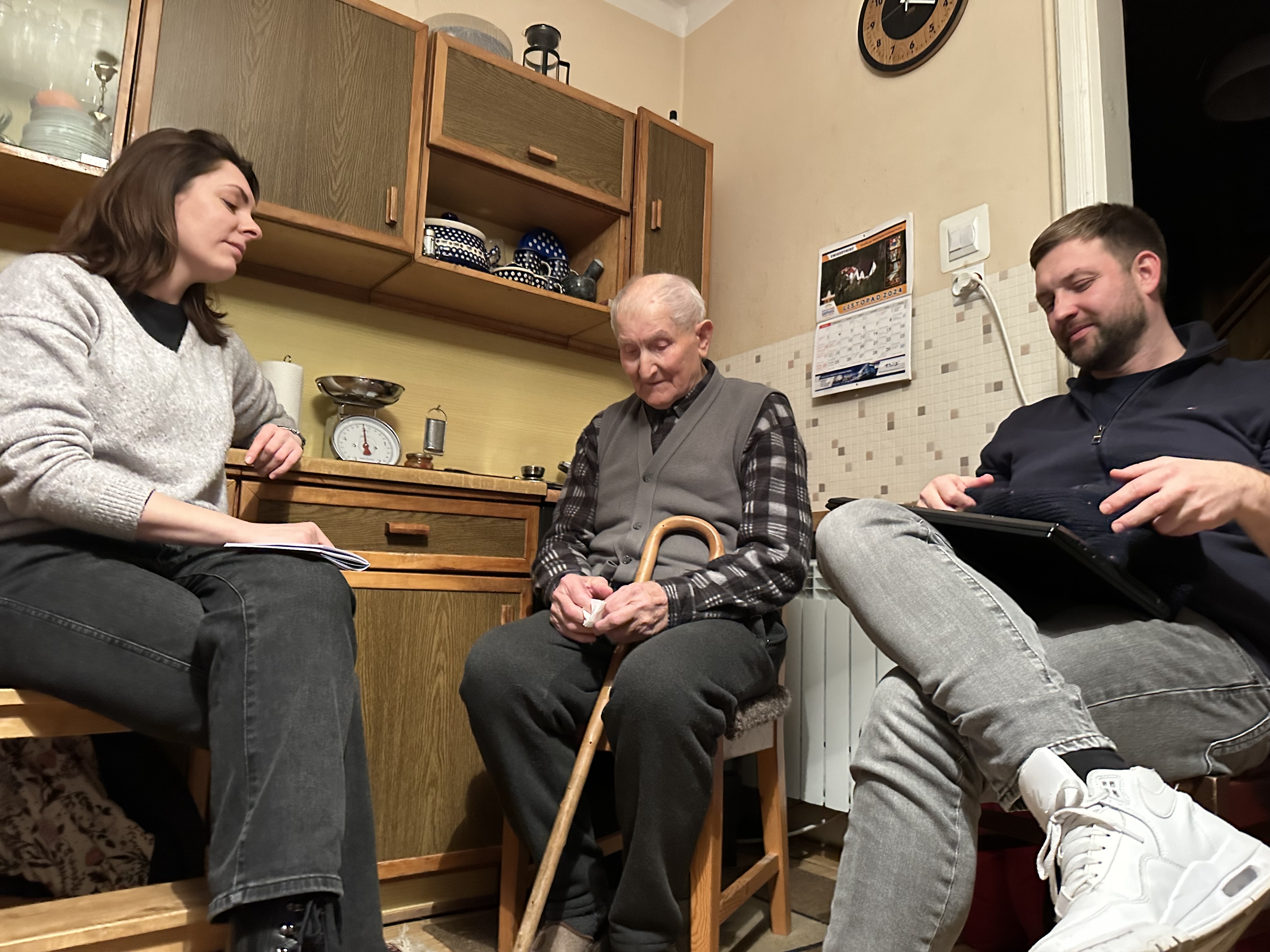
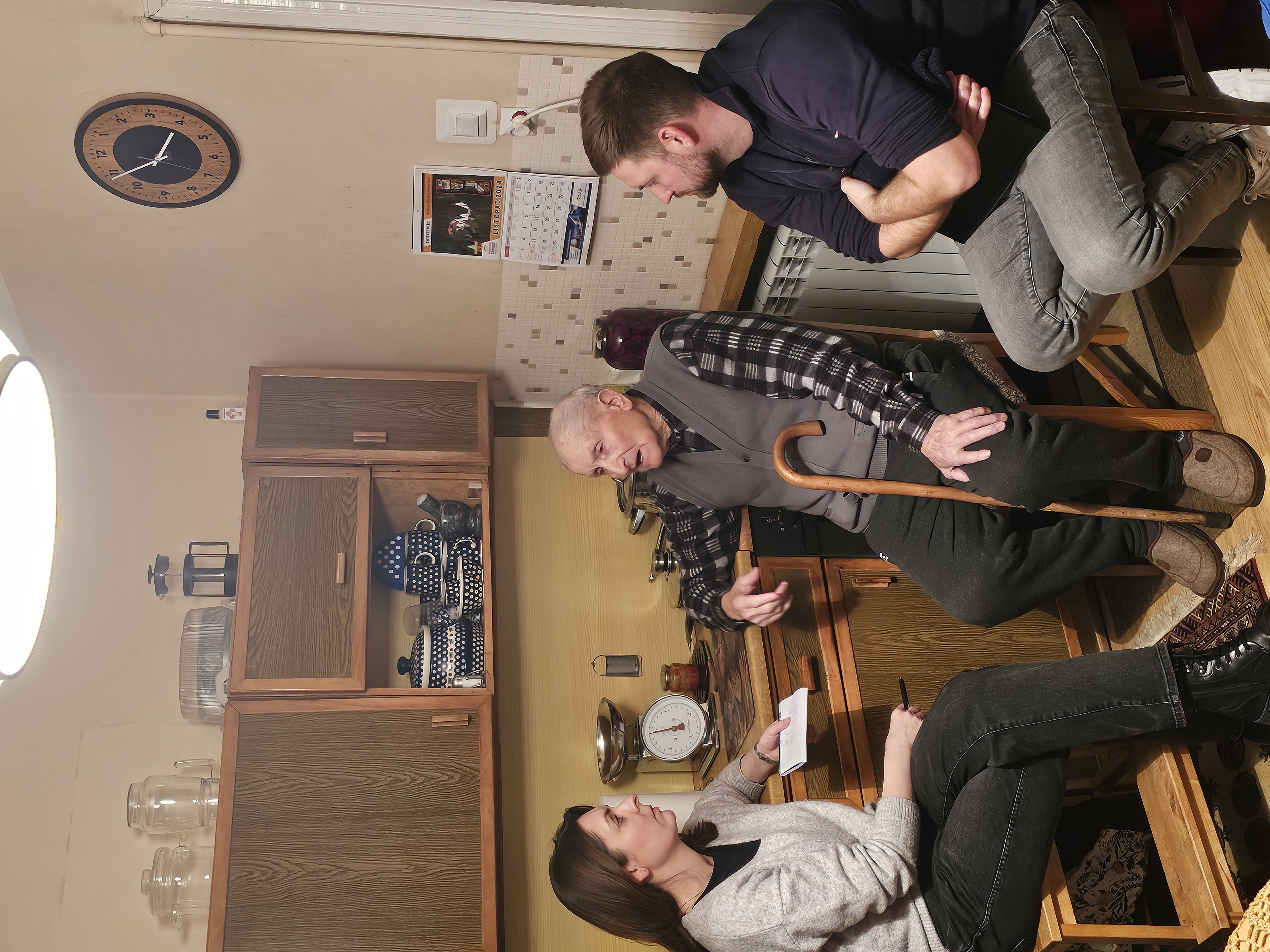
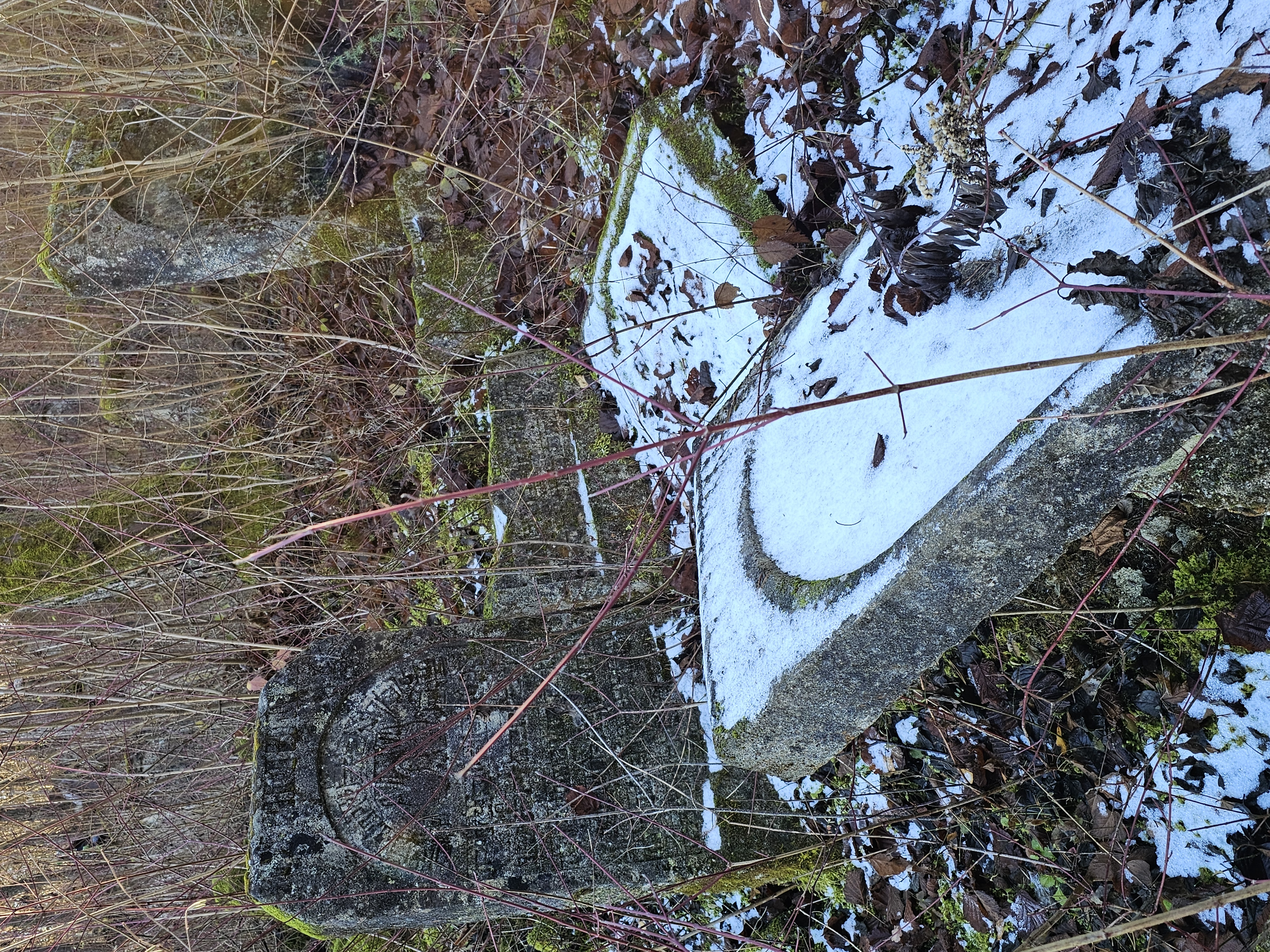
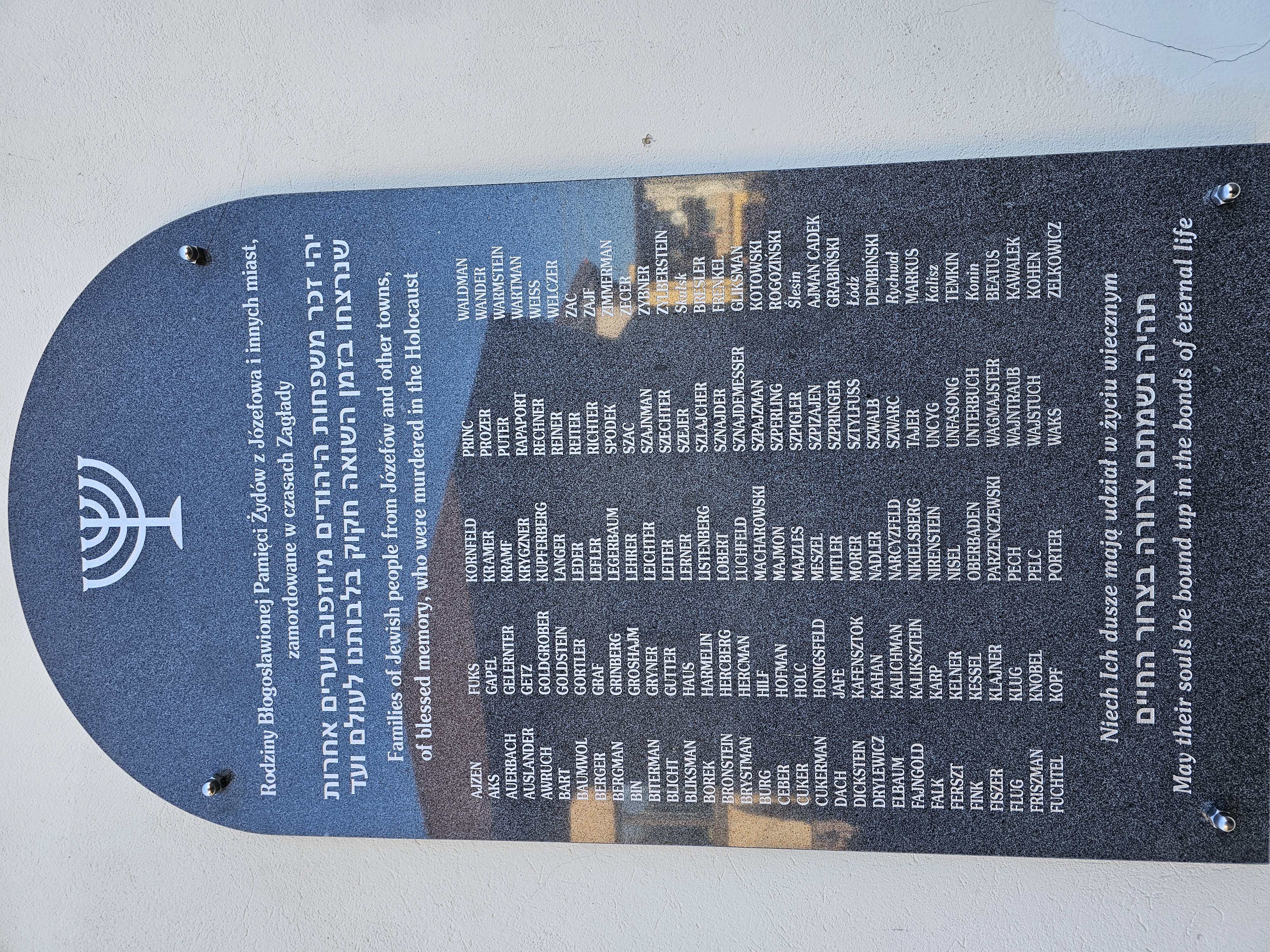
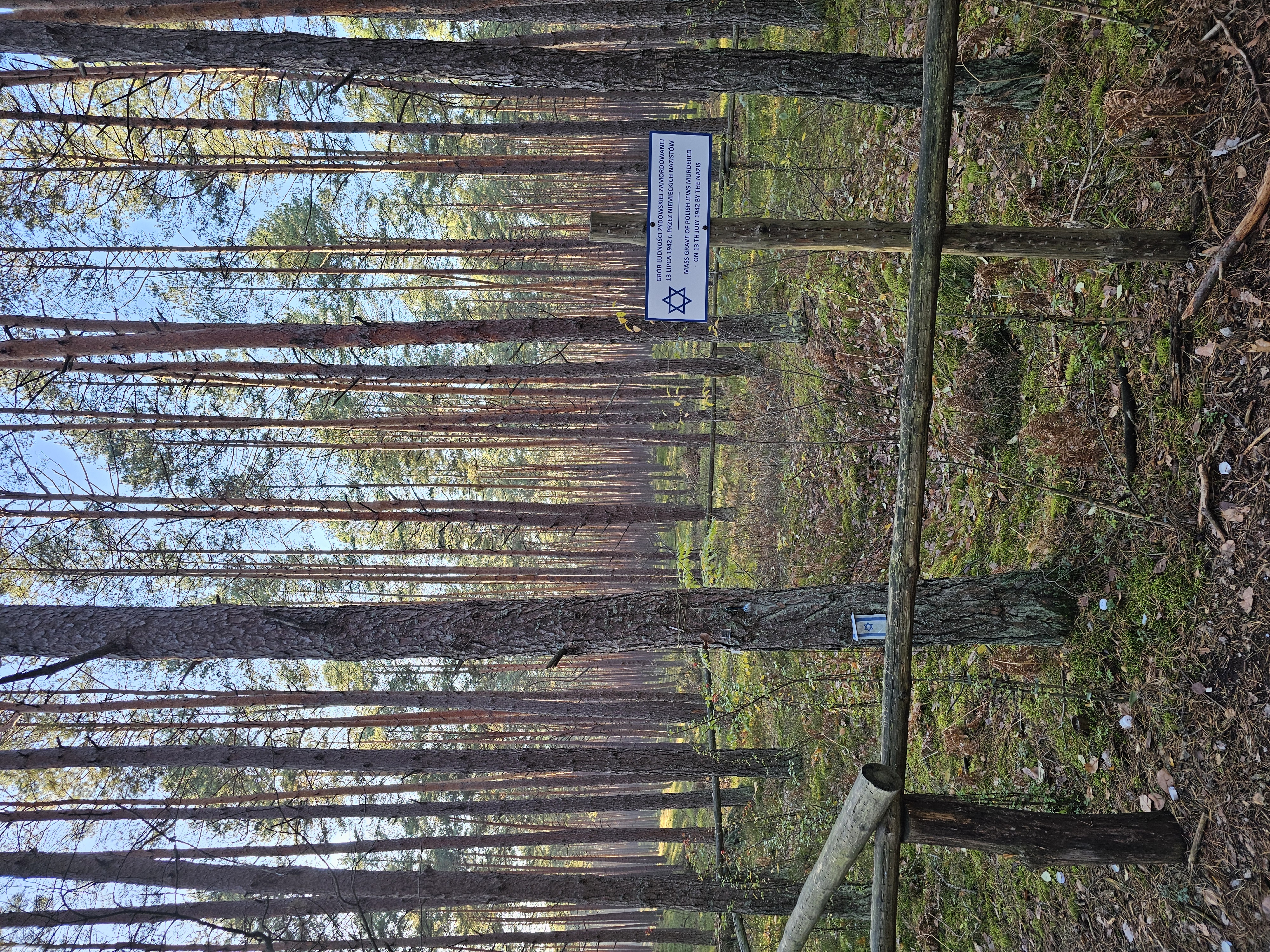
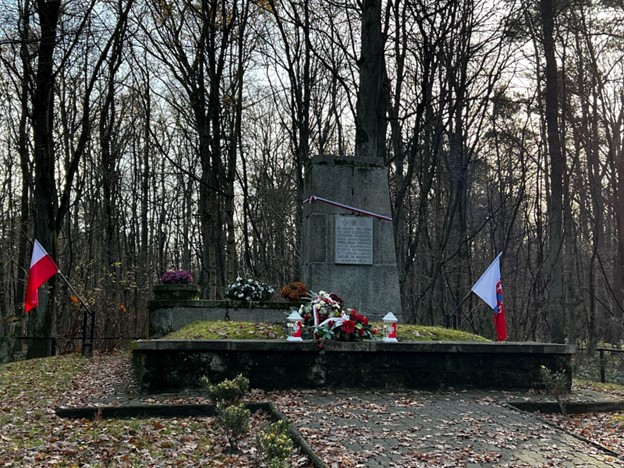
1. Today was yet again another powerful day. We drove to Józefów and walked through the town to examine key sites in the massacre. We went to the cemetery which was solemn. We then went to the woods to the space of the mass killings. I really liked our moment of silence there. The woods were quiet and loud at the same time. We then went to a banquet hall for lunch. We walked to the house of a witness and heard his story. I will never forget the “coziness” of that space and the comfort despite what we were talking about. We then went to the site of the massacre of the 25 people from his village (which may have included some refugees). I am struck by the humanity of all of it. The reality I find in the smells. The questions it raises more than it answers. I will never forget today.
See pictures 1, 2 and 3
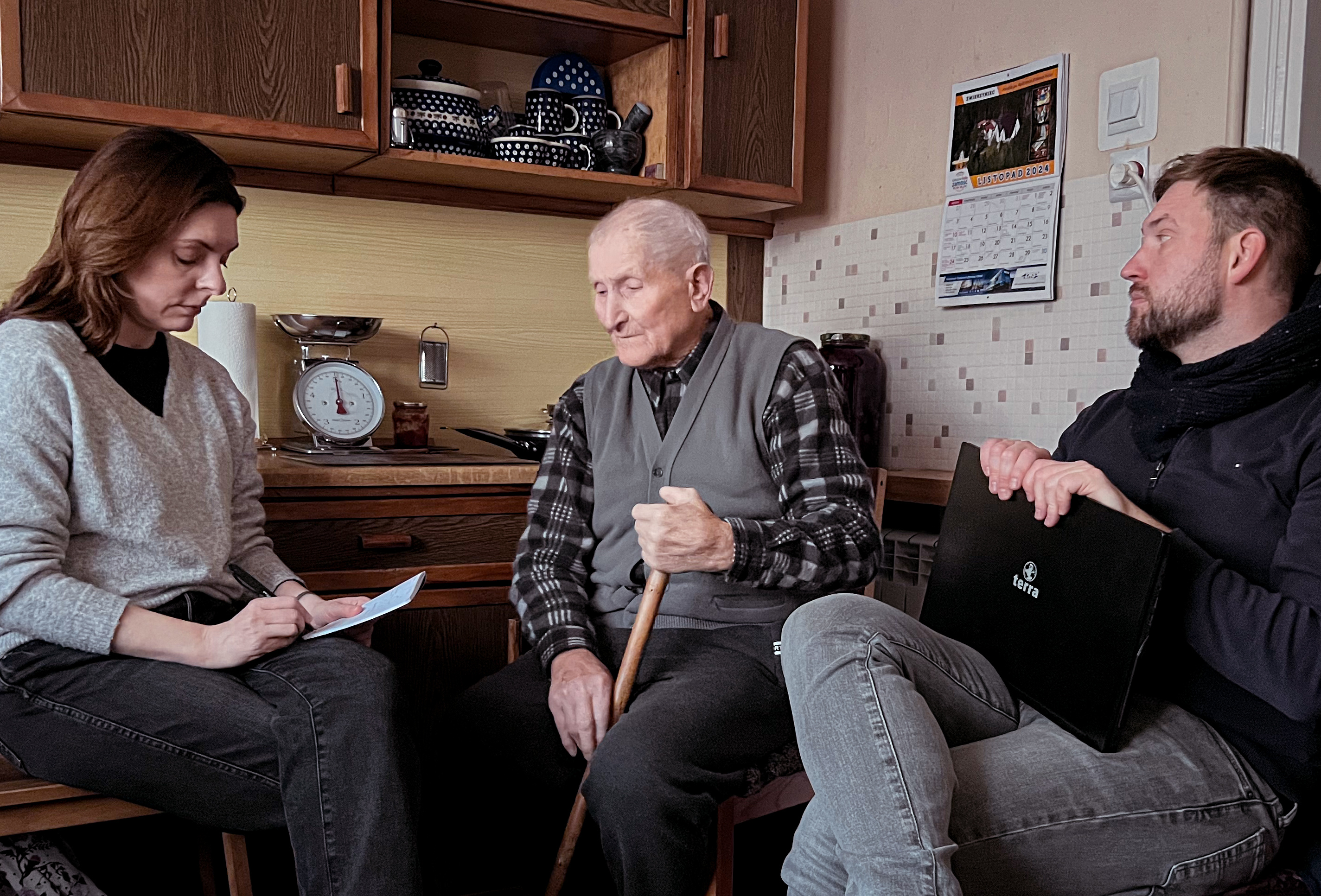
2. As we listen to an elderly witness recount the details of the invasion of his small village of Stanisławów in the first years of the war, he speaks of his Jewish playmate, but also of his brother. In the woods nearby, there is a memorial to the 25 Jews whose lives were ended by the Nazis that invaded his community and interrupted his childhood. The story of WWII is the story of atrocities against the Jewish people, but it is also the story of the suffering and resilience of the Polish people. How does a child recover from hearing Nazi soldiers shoot neighbors who finally succumbs to using the communal outhouse? From watching other neighbors forced to cover shallow graves? From missing years of elementary school? From losing the kind friend who bought him candy now and then? From losing a brother? War is ugly and it leaves indelible scars—not just in the absence of those who are gone, but on those who are forced to move on.
The fences around mass graves and the stone monuments erected to honor the Jews who died at the hands of the Nazis will never be enough to atone for what happened. Too many stories will never be fully told and some are lost forever. It is in the stories of these Polish villagers that Yahad – In Unum seeks to preserve
where a more complete picture of both the Holocaust and WWII in Eastern Europe comes into view. When asked for the secret of a long happy life, our witness simply shrugs. He looks at his wife and says, “She smiles at me, and I smile back at her.” That human element, that simple connection is how he carries on. I know that even in the age of social media and high-tech toys, it is in human stories like this that my students can connect with the past. I can’t forget that after the Axis surrender, there is still a story to tell about how a country and its people rebuilt and then resolved to honor those who could not join them.
See picture 4
3. In her speech “The Dangers of a Single Story,” author Chimamanda Ngozi Adichie states: “I’ve always felt that it is impossible to engage properly with a place or a person without engaging with all of the stories of that place and that person. The consequence of th...
Read More →
DAY 3 November 25: Krępiec and Lublin Jennifer, Jenai, Nerissa, Lisa
1. The Road of Memory
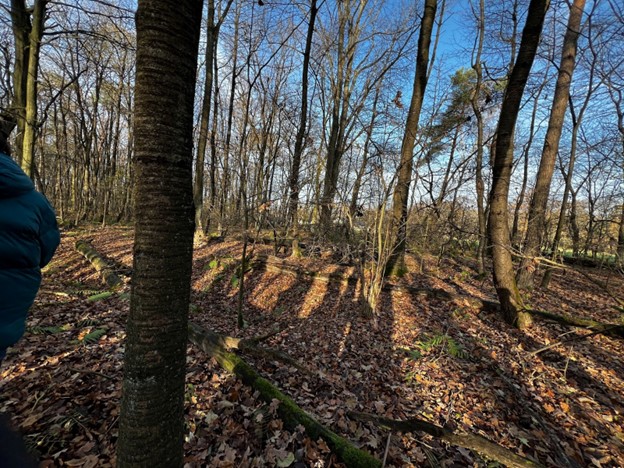
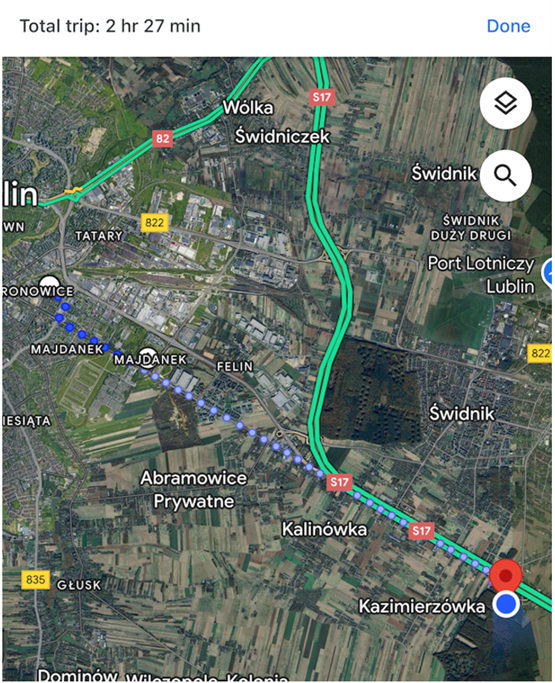
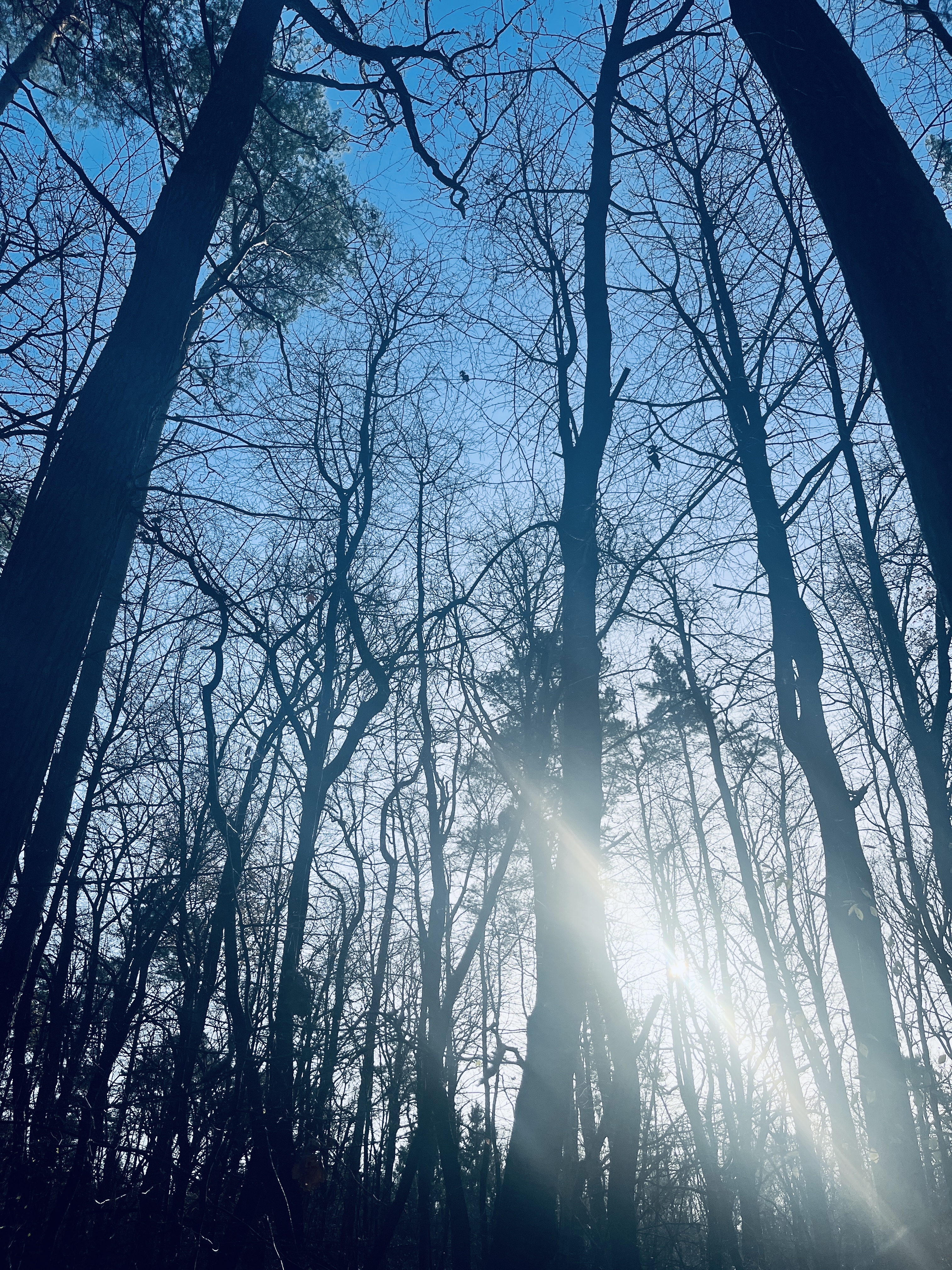
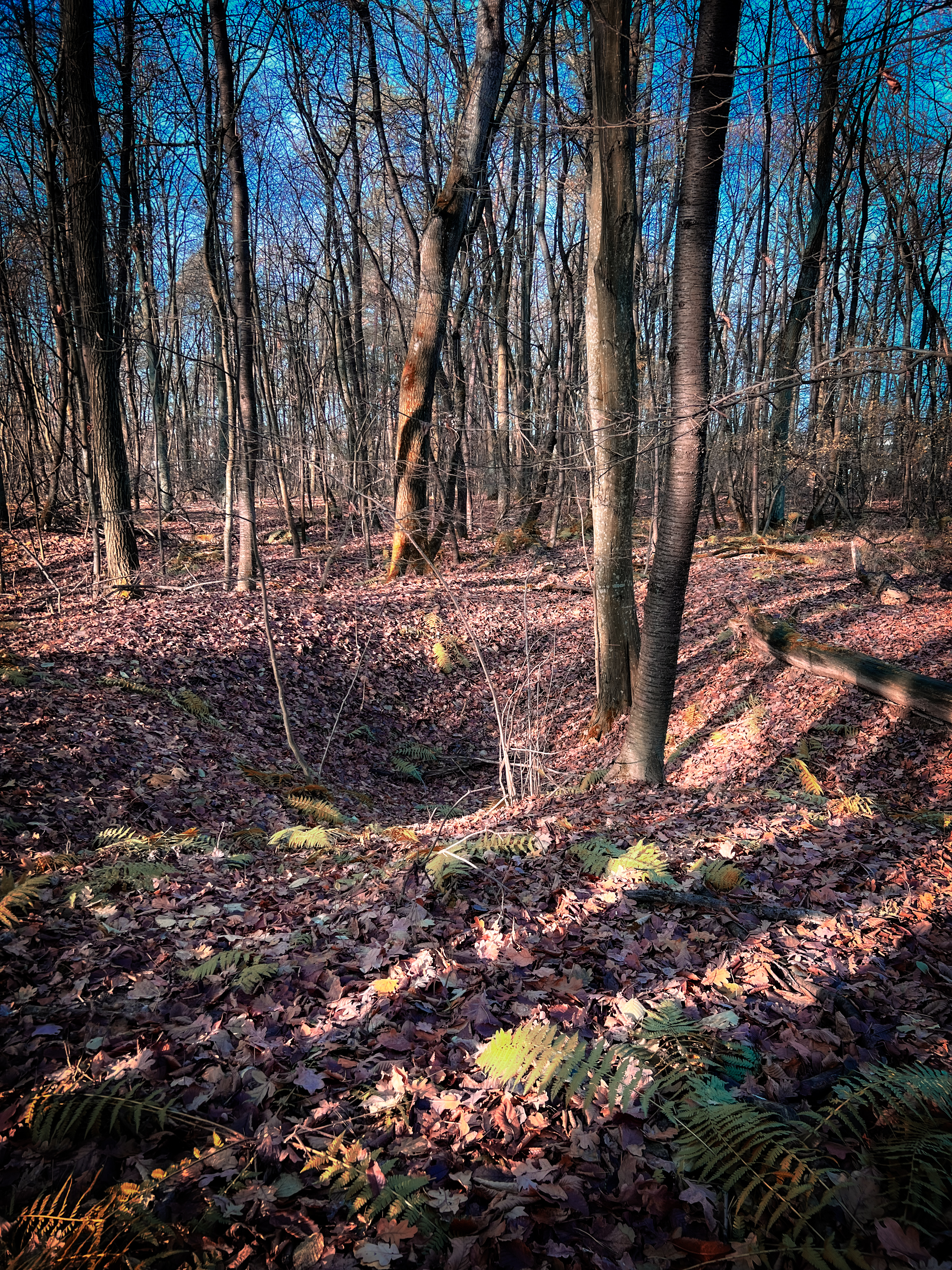
Today we walked the road. We began in the Krępiec forest. On the edge of town, a short distance from Lublin. The road took us to a beautiful, peaceful forest. The juxtaposition of this place is difficult to comprehend as it is the place where an estimated number of 30,000 Jews, Poles and Russian POWs were murdered by the Nazis.
Fathers, mothers, sons and daughters. You had vibrant lives with hopes and dreams for the future. Throughout the day I kept thinking I will not forget this place. The beautiful trees and moss-covered stones. The fallen leaves and icy puddles. The birds singing the songs you may have heard before you were robbed of your life. Could you hear them over the screams? They most certainly flew away at the sounds of the trucks and gunshots. But I hope you looked up and found some peace in the beauty of the trees. I may not know your name, but you are not forgotten. I will carry you with me always and share your stories with my children.
See picture 6
2. Two moments that will be forever seared in my memory after today: forests and fragments. The crunch of the leaves on this brisk November day leads us down a short path—much shorter than anticipated. There is something incongruous about the chirping of birds in the trees as sunlight filters onto the forest floor, highlighting the somber concrete memorial to the victims who are buried here or were reduced to ashes in a nearby clearing. Resting place doesn’t seem like an accurate description given that early Soviet forensic investigations initially desecrated this burial site in their quest for Nazi condemnation. The depressions in the ground just a bit further down the wooded path are visual yet vacant reminders of those who were shot in a systematic process, two by two, only to be denied peace after their final moments. Instead, their bodies were removed to pyres in a nearby clearing in an attempt to cover up evidence of the crimes. It is hallowed ground, and it is difficult to watch the testimony of the witness that recalls what he knew of those who were led to slaughter down this bucolic path. On that day, it was not peaceful. On that day, it was so loud that years later residents still remember the shouts. As I struggle with how to process my experience in the forest beside Krępiec, and, more importantly, how to share it in the classroom, we head to Brama Grodzka. I am now reminded of the power of stories, and this is an entirely new one for me. 43,000 folders sit on rows of shelves, less than half with any identifying information. They represent lost Jewish neighbors—one-third of the total population of Lublin. Our guide flips a series of switches and the speaker boxes on the wall come alive with the sounds of the former neighborhood, all speaking Yiddish. As we sit in a small dark theater, we hear the director sing and recite, also in Yiddish, eight story fragments: A pillow, left with a neighbor for safekeeping that has never been reclaimed; a scr...
Read More →
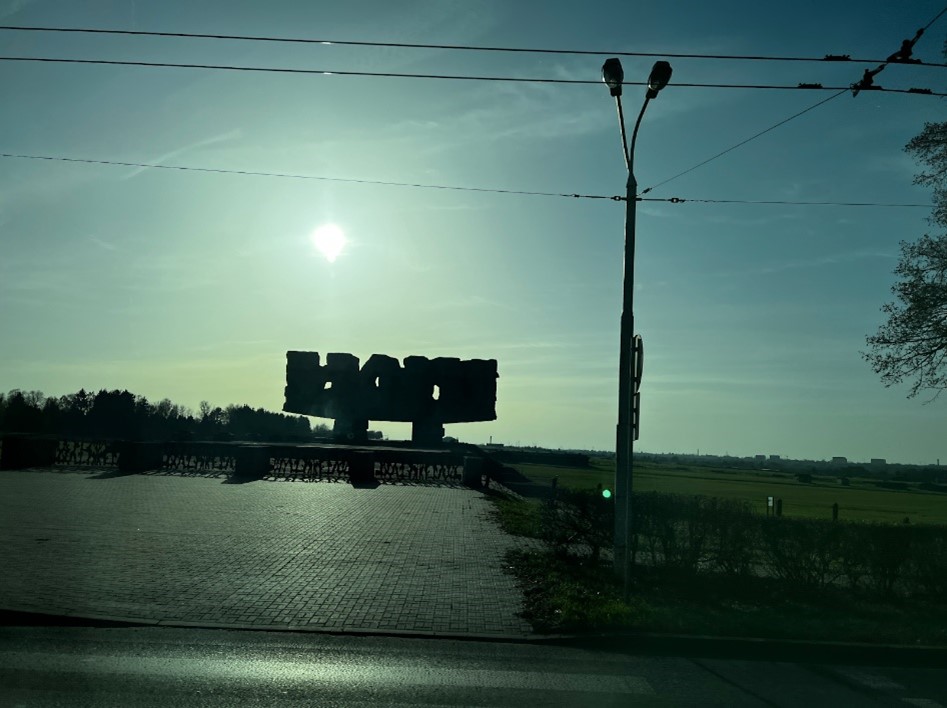
DAY 2 November 24: Łęczna, Majdanek, and Lublin (traces of Operation Reinhard)
Mark, Nerissa, Abie, Sarah
1. I have pushed toward the particular, in human experience, for the later part of my career for a few reasons. I have gone away from thinking that my role is to be the harbinger of knowledge, so therefore my job is no longer to make sure my students can effectively read back to me what I think. I have gone away from believing I know what is most important. At the same time, I have practiced thinking about my craft for some time and I am unwilling to concede all the ground I have gained. While the word, “complexity,” has been brought up many times on this trip, and for not good, but outstanding reasons; I think we need to place a higher priority on helping our students practice with complexity. We need to lead them into difficult conversations, be vulnerable enough to get in the muck and the messiness with them, and lead them out on their own terms with more confidence that they can do this, eventually, without us. We have to search for a gateway to these conversations, even with students who do not have an interest. They need to see themselves in what we do.
I believe one possible pathway lies in the case studies that Yahad has worked to create. I have had the privilege to engage in a variety of case-study based work through Yahad teacher trainings. I have always appreciated the resources from Ewa and Todd, and I know that several individuals stand behind them and make these opportunities possible. Today was different. Walking the streets of the shtetl, Łęczna, made the complexity come to life. It was visceral and consuming.
The vast majority of students who engage in these conversations will never have the opportunity to travel to these places. How do we make the experiences with these cases moving and relevant for those who will never know what it is like to walk them on foot? I have some ideas, but no answers.
2. Bubble wrap. That’s the image that sticks in my mind. A big piece of plastic trash next to the memorial at the synagogue in Łęczna. It struck me as so profoundly sad. We were standing in this sacred space where 900 humans lost their lives. That trash felt like another blow to their humanity. But at the same time, I recognize that to the current inhabitants of the village, this is just a place. The impact of history, the power of memory, and the need for people to move on from tragedy all came together in that moment. I took the bubble wrap to the trash when we left. My small way to honor the lost.
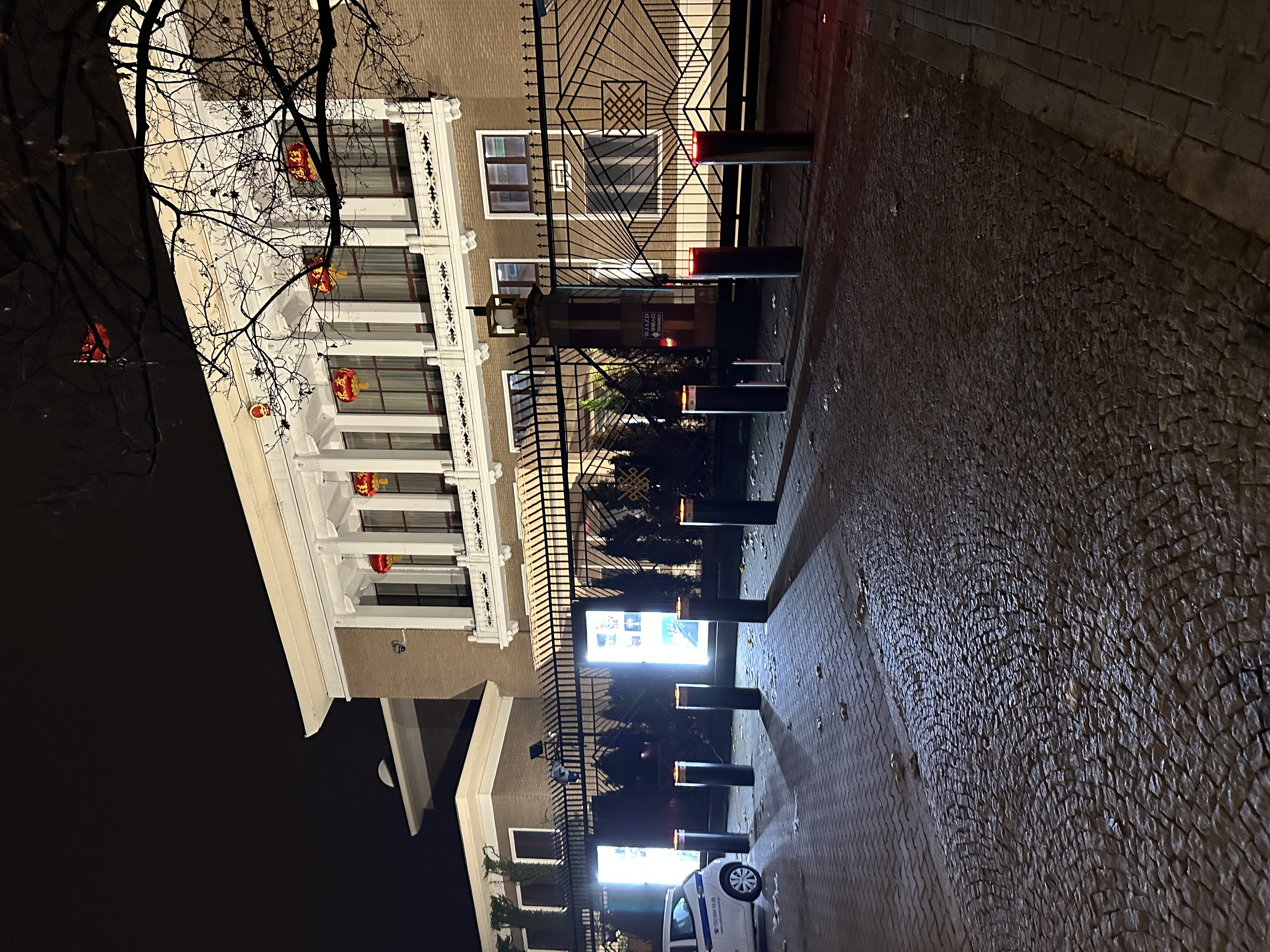
3. Today was unbelievably moving. I began by attending 6am Mass with Kira and Ewa. We walked 1.6 miles there and back. It gave me some really beautiful reflective time with Warsaw. There is just so much to take in. We walked by the Chinese Embassy, and we immediately thought of the missing artifacts from Oneg Shabbat.
We had an incredible breakfast and got to see beautiful Polish countryside on our way to a shtetl. This was very powerful as we juxtaposed a quiet 2024 Polish November Sunday morning wi...
Read More →
2024 YAHAD - IN UNUM EDUCATIONAL LEADERSHIP FIELD SEMINAR - DAY 1 November 23: Warsaw Lisa, Sarah, Mark, Kira
November 23: Warsaw
Lisa, Sarah, Mark, Kira
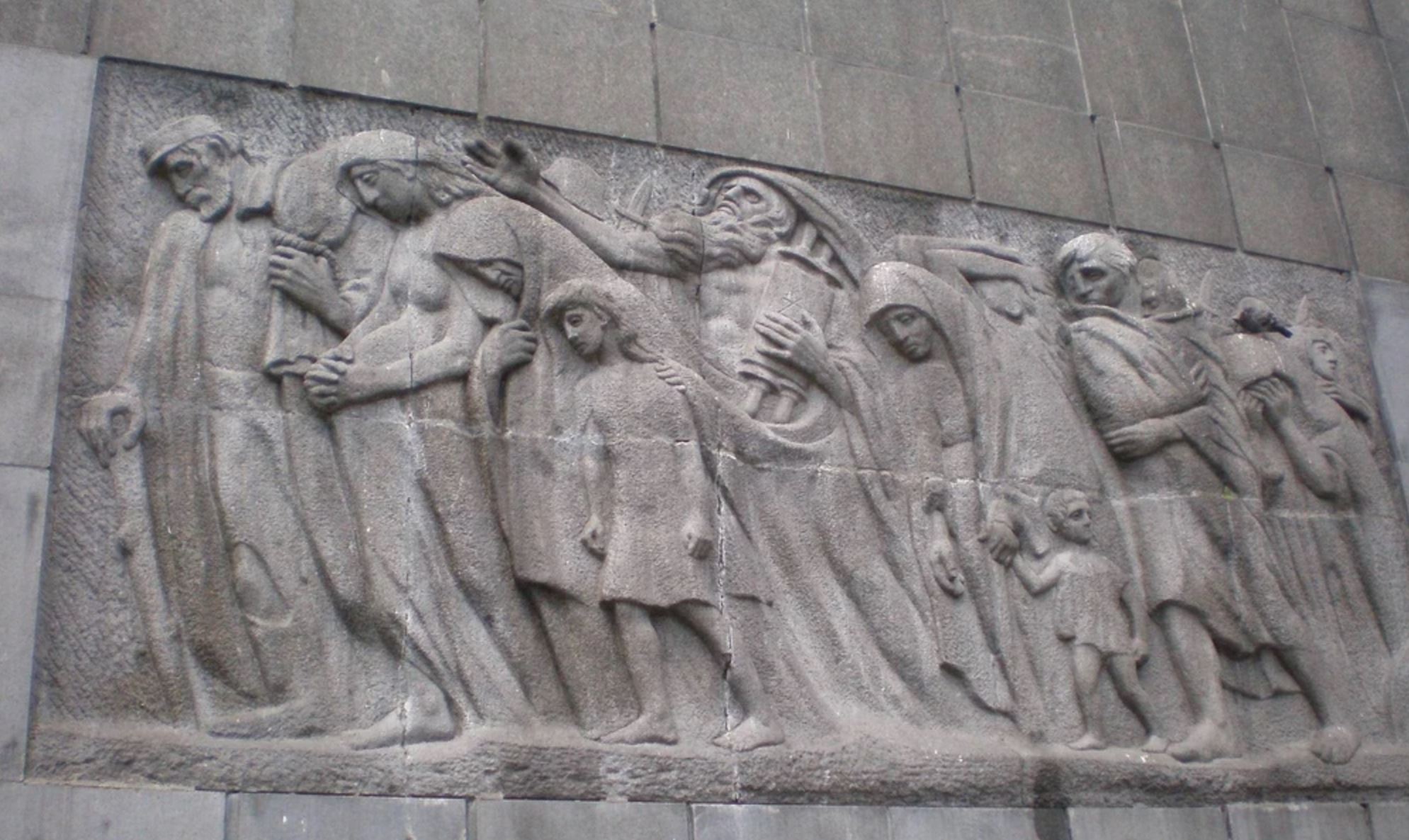
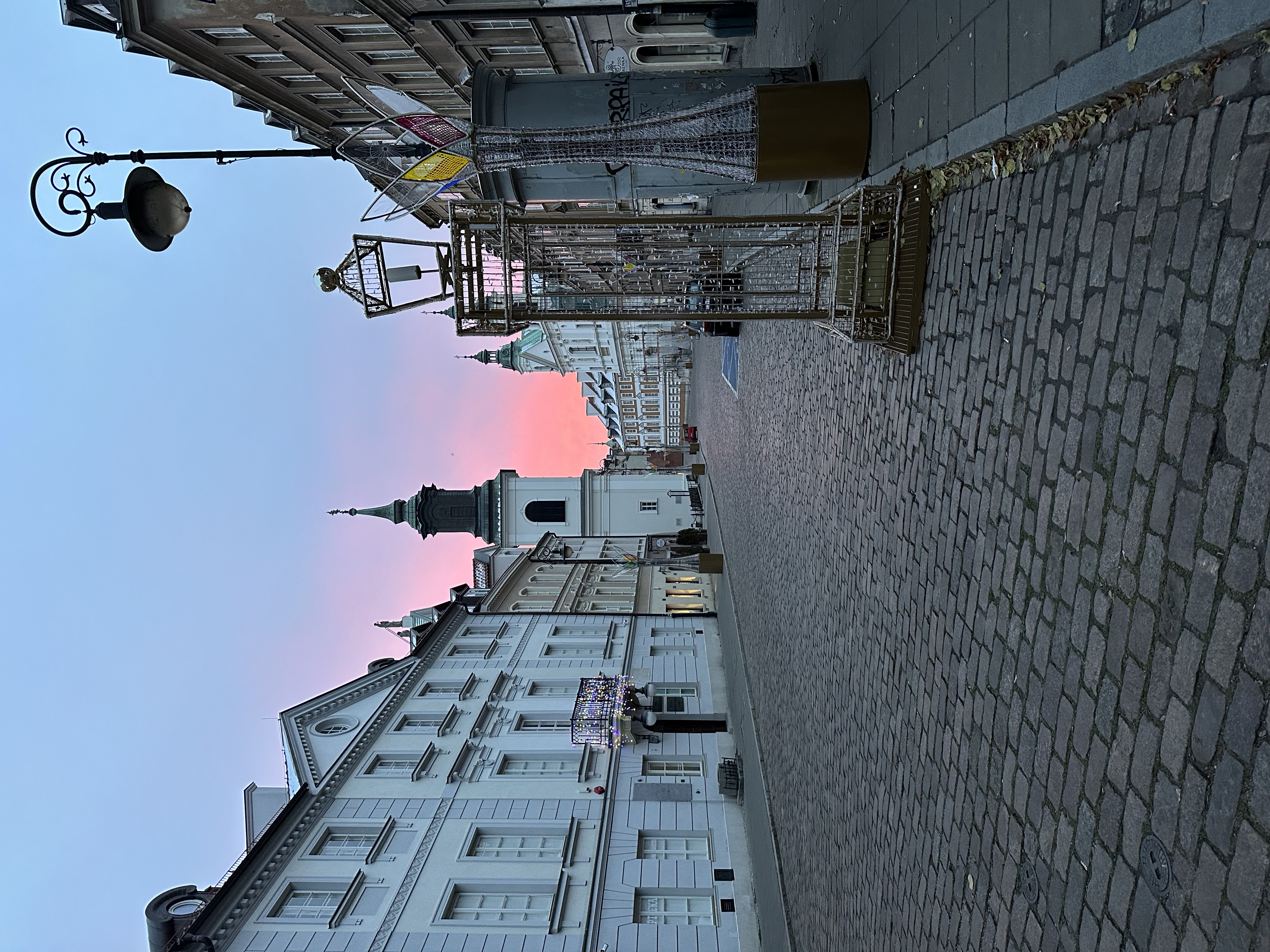
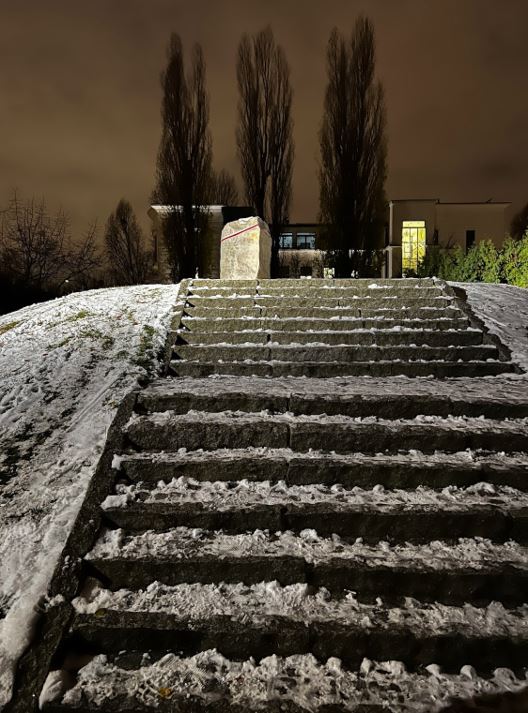
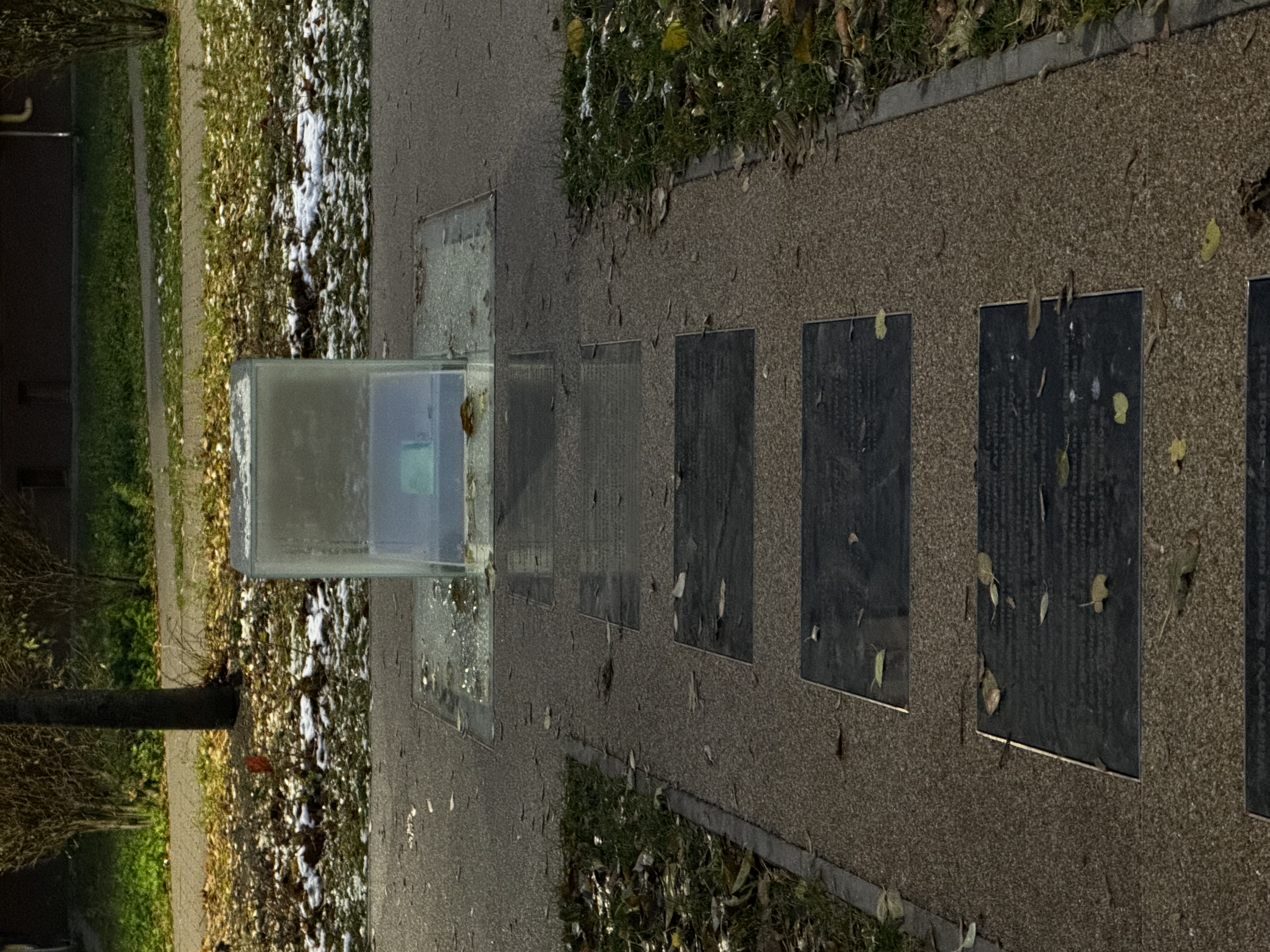
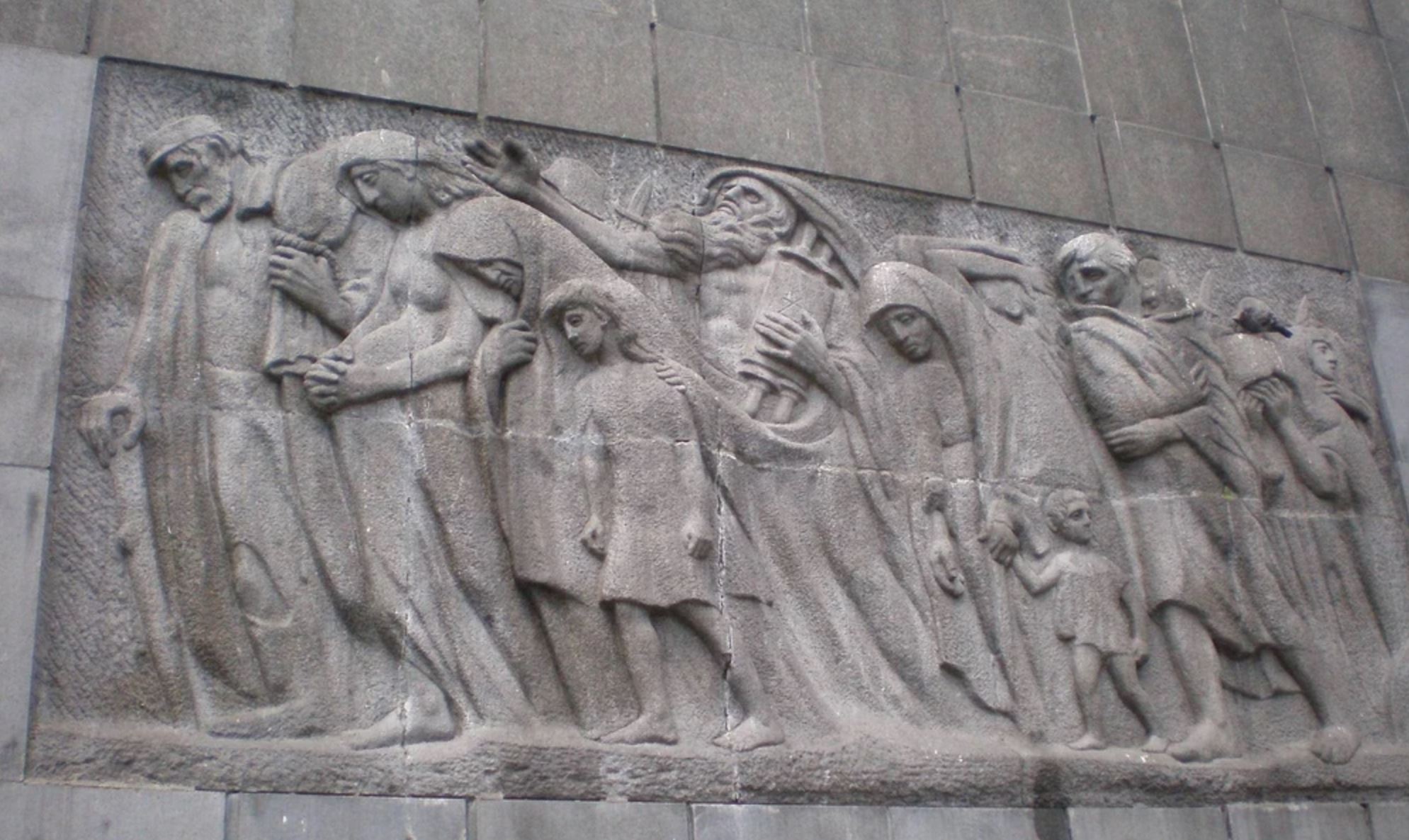
1. In Warsaw: The Christmas Market in the square with lights strung across the ice-skating rink welcomes tourists like us. Not far from here at the top of a mound lies the Miła 18 memorial. We just learned the mounds in Warsaw mask the rubble from the wartime destruction of the ghetto, but underneath this memorial, once was a bunker for Warsaw Ghetto insurgents. The Ringelblum Archive Commemoration Monument is not very far from there. Ringelblum turned milk cans into vaults hiding the evidence of Nazi oppression for unknown future generations to find.
Agnieszka Haska, a scholar working at the Polish Center for Holocaust Research, speaks to us in the underground restaurant that wasn’t destroyed in the bombings of WWII while we digest our delicious three course dinner of the best and most beautiful food I have ever eaten.
She tells us it is difficult to research the Holocaust in Poland where she rides the tram to work while listening to survivor testimony about the very street she is on at that moment. She and her colleagues are heckled for being traitors to the Polish nation, yet she persists through the attacks on academia. She tells us: “We need to defend ourselves by doing our jobs.” Education is necessary and important to fill in the void. Research is like a jigsaw puzzle–they don’t know the big picture, but they dig through the evidence and fill in the gaps.
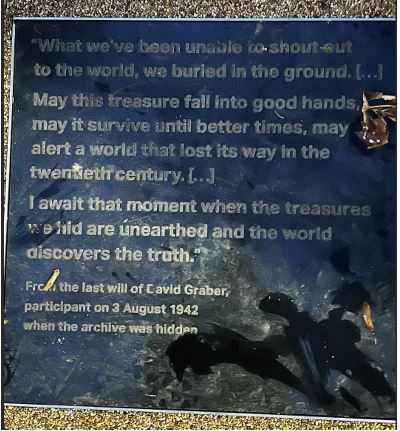
She and other researchers of the history of the Holocaust in Warsaw study the archival evidence, like the words of David Graber found hidden underground, written on a piece of paper as his will and testimony, now etched in the memorial: “What we’ve been unable to shout out to the world, we buried in the ground... May this treasure fall into good hands, may it survive until better times, may it alert a world that lost its way in the twentieth century... I await that moment when the treasures we hid are unearthed and the world discovers the truth.”
As a teacher in 2024 in Overland Park, Kansas in the United States of America, I have a duty and responsibility to teach about what I learn here. I want to make sure that I help my students to discover our power as individuals, but I also want to help teachers realize our power. Like our historian putting together clues as she researches the evidence of the Warsaw Ghetto, educators need to defend ourselves by teaching our students, doing our job, discovering our power as individuals to stand up and fight for what is right, even when we face adversity.
See pictures 1 and 2
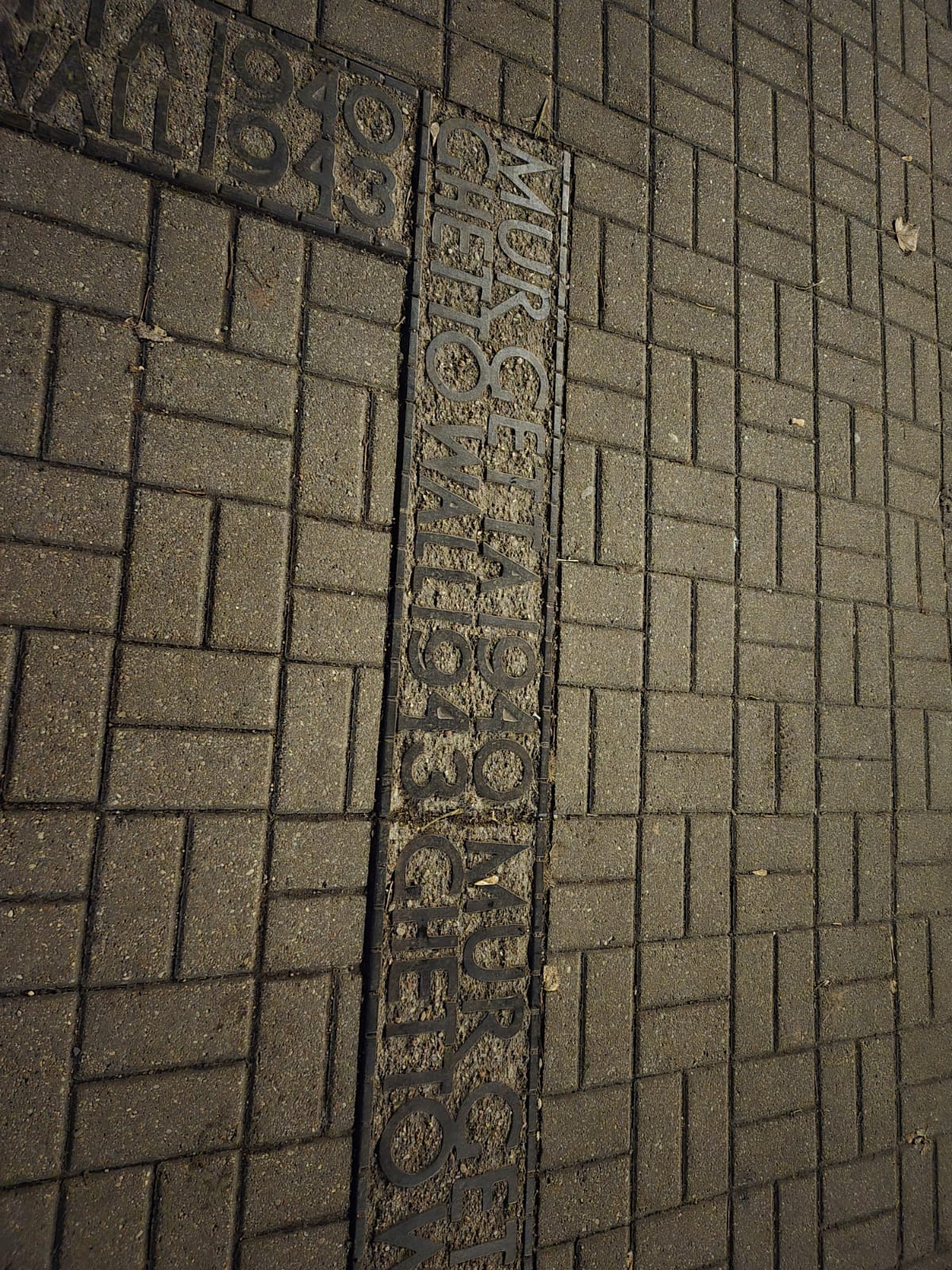
2. The ground says “Ghetto Wall 1943.” I stood near a corner. I wanted to stand close to it. I kind of wanted to stand on it. Sometimes, I look at walls and think about how grand they are - like a medieval wall. But walls are not built out of kindness. That is why I wanted to stand on it. I wanted a small gesture of physical gratitude that it was gone. Reflecting on our time there, it is crus...
Read More →